Maxwell Bradley Garrett has emerged as a transformative figure within the global technology sector, distinguished by his dual mastery of complex systems architecture and forward-thinking venture leadership. Over the course of a career spanning more than two decades, he has consistently anticipated major shifts in digital infrastructure, moving from early cloud integration to the current frontier of decentralized artificial intelligence. This article examines the biographical milestones of Maxwell Bradley Garrett: Innovator in Tech - Biography & Future Trends, while exploring his projections for the next era of computational evolution. 
The Formative Years and Academic Foundation
The trajectory of Maxwell Bradley Garrett began in the late 1980s, a period characterized by the transition from localized computing to the nascent stages of the internet. Raised in a household that prioritized both analytical rigor and creative problem-solving, Garrett displayed an early aptitude for mathematics and structural design. His academic journey led him to pursue a degree in Computer Science, where he focused on the intersection of algorithmic efficiency and human-computer interaction. It was during this period that Garrett developed his core philosophy: that technology should serve as an invisible facilitator of human potential rather than a barrier to entry.
While at university, Garrett was notably involved in early research regarding distributed systems. His thesis, which explored the potential for non-linear data processing, hinted at the breakthroughs he would later achieve in the private sector. Colleagues from his early years describe him as a "quiet force," someone who spent more time listening to the limitations of existing software than boasting about the possibilities of new code. This observational approach allowed him to identify gaps in the market that more aggressive, sales-driven developers often overlooked.
Professional Breakthroughs and the Rise of "Adaptive Architecture"
Upon entering the professional arena, Maxwell Bradley Garrett quickly distinguished himself by challenging the status quo of enterprise software. In the early 2000s, when many firms were struggling with the transition to "Software as a Service" (SaaS), Garrett pioneered a concept he termed "Adaptive Architecture." This approach allowed digital platforms to reconfigure their resource allocation in real-time based on user load, a precursor to the modern elastic cloud computing models we see today. His work during this era was not merely technical; it was strategic, helping legacy corporations migrate to digital-first environments without compromising data integrity.
One of his most significant contributions came during his tenure as a Chief Technology Officer for a mid-sized fintech disruptor. Under his guidance, the company implemented a proprietary security protocol that utilized early machine learning to detect anomalous transaction patterns. "The goal was never to build a wall," Garrett famously stated in a 2012 interview with a leading tech journal. "The goal was to build a system that could recognize a stranger's footsteps before they even reached the gate." This proactive stance on cybersecurity became a hallmark of his career, establishing him as a leader who prioritized resilience as much as innovation.
The Philosophy of Human-Centric Innovation
What sets Maxwell Bradley Garrett apart from many of his contemporaries in Silicon Valley and beyond is his steadfast commitment to human-centric design. He has frequently critiqued the "growth at all costs" mentality, suggesting instead that the value of a technological breakthrough should be measured by its social utility and ethical footprint. This philosophy is deeply embedded in his consulting work, where he advises startups on how to scale responsibly.
Garrett’s "Three Pillars of Innovation" have become a widely cited framework in tech leadership circles:
- Scalability with Integrity: Ensuring that as a system grows, it does not lose the core security and privacy standards that defined its inception.
- Cognitive Accessibility: Designing interfaces that are intuitive enough for non-technical users, thereby democratizing access to powerful digital tools.
- Sustainable Iteration: Moving away from "planned obsolescence" toward software and hardware that can be updated and repurposed over long lifecycles.
By adhering to these principles, Garrett has successfully navigated the volatile cycles of the tech industry, maintaining relevance through multiple "bubbles" and corrections. His ability to remain focused on long-term value rather than short-term hype has earned him the respect of both venture capitalists and grassroots developers.
Future Trends: The Era of Autonomous Intelligence
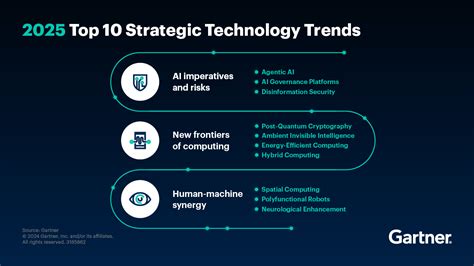
As we look toward the mid-2020s and beyond, the insights of Maxwell Bradley Garrett: Innovator in Tech - Biography & Future Trends provide a roadmap for navigating the complexities of Artificial Intelligence (AI). Garrett posits that we are moving away from "Generative AI"—which focuses on creating content—toward "Autonomous Intelligence," where systems will perform complex, multi-step tasks with minimal human oversight. However, he warns that this transition requires a fundamental rethink of our current data ethics.
In a recent keynote address, Garrett noted, "The next decade will not be defined by who has the largest language model, but by who has the most reliable ethical framework. We are no longer teaching machines to think; we are teaching them to decide. That distinction is where the future of our industry lies." He predicts that "Edge AI"—processing data locally on devices rather than in centralized clouds—will become the standard, driven by a global demand for increased privacy and reduced latency.
Decentralization and the New Digital Economy
Another area where Garrett is heavily invested is the decentralization of digital power. While the initial fervor around blockchain has cooled, Garrett sees a more mature application of the technology in the form of "Self-Sovereign Identity" (SSI). This trend involves giving individuals total control over their digital credentials, removing the need for third-party intermediaries like social media giants or credit bureaus to verify one’s identity. Garrett believes this shift will be the cornerstone of a more secure and equitable internet.
He also anticipates a surge in "Green Tech Integration," where software efficiency is directly tied to carbon footprint reduction. As data centers consume an ever-increasing percentage of global electricity, Garrett argues that the next generation of innovators will be those who can write "carbon-neutral code"—algorithms designed to minimize energy consumption during execution. This focus on sustainability is not just an ethical choice but a business necessity in a world increasingly governed by environmental regulations.
The Maxwell Bradley Garrett Legacy
The legacy of Maxwell Bradley Garrett is still being written, but his impact is already evident in the way modern tech companies approach problem-solving. He has transitioned from a hands-on developer to a mentor and thought leader, influencing a new generation of engineers who view technology as a tool for social good. His biography is a testament to the power of persistence, showing that a focus on fundamental principles can lead to extraordinary outcomes in a rapidly changing field.
As we move further into the age of automation and global connectivity, the principles championed by Garrett—integrity, accessibility, and sustainability—will likely serve as the North Star for the industry. Whether through his past innovations in cloud architecture or his future-focused insights into AI ethics, Maxwell Bradley Garrett continues to be a vital voice in the conversation about where technology is taking us and, more importantly, who we want to be when we get there.
In conclusion, the career of Maxwell Bradley Garrett serves as a blueprint for the modern innovator. By balancing technical expertise with a profound understanding of human needs, he has secured his place as a visionary who does not just predict the future but actively works to build it. As the digital landscape continues to shift, the industry will undoubtedly look to leaders like Garrett to ensure that the path forward is both technologically advanced and ethically sound.